Backseat Offroad Vehicle Tier List
Role rankings for the five old 4x4s — guidance, not official studio names.
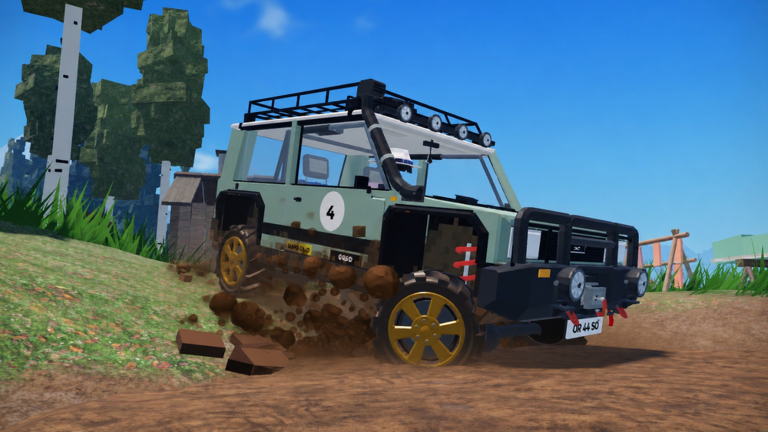
Backseat Offroad gives you a garage of five old 4x4s built for crawling, not arcade racing. All of them share the fantasy of low range, diff lockers, winches, and bolt-on hardware like lifts, snorkels, and engine swaps. Exact factory badges can shift as the studio renames or reskins trucks, so this hub ranks roles instead of inventing fake proper names. Treat every tier as community-style guidance for November 2026 — useful for choosing a trail partner, not a tournament rulebook.
Use this page with Climb Builds when the snowy summit is the goal, and with the Trail Checklist before you leave the lakeside forest.
How we score roles
We split performance into four jobs players actually do on the huge map:
| Job | What “good” means |
|---|---|
| Climb | Stable low-range torque, locker confidence, winch angles on rock shelves |
| Water | Snorkel value, calm throttle through rivers, recovery after submerged mistakes |
| Snow | Traction on summit approaches, patience on ice shelves, cold-weather route choice |
| General exploration | Comfort for long forest loops hunting ~100 hidden places |
S / A / B here means relative fit, not “trash trucks.” A B-tier climber can still be A-tier for relaxed lake circuits.
The five garage roles
Until official marketing names stabilize in your client, talk about the lineup like this:
- Starter Crawler — balanced first truck; teaches lockers without punishing every mistake.
- Heavy Haul — denser feel, happier with slow torque and loaded recoveries.
- Narrow Trail Scout — tighter body for trees and cabin spurs; less forgiving when tipped.
- River Runner — setup that benefits earliest from snorkels and careful water lines.
- Summit Specialist — geared (via swaps and lift) toward steep snow approaches.
Your garage order may differ; map the descriptions to whichever 4x4 matches the behavior after a few trails.
Climb tier (forest shelves to summit rock)
| Tier | Role | Why |
|---|---|---|
| S | Summit Specialist | Best patience on steep pitches once low range and lockers are engaged |
| A | Heavy Haul | Torque and mass help when winching upward with a partner |
| A | Starter Crawler | Surprisingly capable if you avoid panic throttle |
| B | Narrow Trail Scout | Great lines, easier to high-side on off-camber rock |
| B | River Runner | Fine approach truck; not the first pick for final summit steps |
Deep setups live on Climb Builds.
Water tier (rivers, lake edges, flooded ruts)
| Tier | Role | Why |
|---|---|---|
| S | River Runner | Snorkel-first mindset and calmer bow entry |
| A | Starter Crawler | Predictable when you feather throttle |
| A | Heavy Haul | Can bull through short fords if bow wave stays controlled |
| B | Summit Specialist | Often lifted for rocks; watch belly depth |
| B | Narrow Trail Scout | Light and tippy on slick exit banks |
Always assume water hides soft bottoms. Winch to a tree before you need it, and read Co-op Winching if a friend can anchor on shore.
Snow tier (alpine village approaches and summit crust)
| Tier | Role | Why |
|---|---|---|
| S | Summit Specialist | Built for the last icy stairs |
| A | Heavy Haul | Momentum without wheelspin when lockers are in |
| B | Starter Crawler | Works with perfect lines; struggles if you rush |
| B | River Runner | Less ideal once water skills stop mattering |
| B | Narrow Trail Scout | Narrow helps trees; ice off-camber remains scary |
Snow punishes spinning. If tires polish the crust, stop, lock, low-range, and try a new line instead of digging a hole.
General exploration tier (hidden cabins & long loops)
| Tier | Role | Why |
|---|---|---|
| S | Starter Crawler | All-day comfort while you learn landmarks |
| S | Narrow Trail Scout | Slips into cabin spurs and tight timber |
| A | River Runner | Excellent if your loop includes multiple fords |
| A | Heavy Haul | Safe when you expect self-recoveries |
| B | Summit Specialist | Overkill for lakeside sightseeing; still fine |
Exploration rewards curiosity more than peak tier. Bring a canoe mindset for lake segments when the studio’s canoe feature fits your route, and keep notes on cabin GPS-style landmarks you invent for yourself.
Parts priority that shifts tiers
Hardware matters as much as chassis role:
- Winch — non-negotiable for S-tier climbs; mount and test before the steep section.
- Diff lockers + low range — engage deliberately; do not leave them out of muscle memory.
- Lift — helps belly clearance on rock; can worsen water approach angles if extreme.
- Snorkel — raises confidence in rivers; does not replace slow throttle.
- Engine swaps — change how easily you crawl versus overpower and dig.
A Starter Crawler with thoughtful parts can out-climb a neglected Summit Specialist. Rank builds, not only silhouettes.
Suggested garage progression
- Learn lockers and winch aim on the Starter Crawler near forest trails (Getting Started).
- Unlock confidence in water with River Runner habits and snorkel installs.
- Use Narrow Trail Scout evenings for cabin hunting among the ~100 hidden places.
- Bring Heavy Haul when friends need an anchor truck for co-op recoveries.
- Spec Summit Specialist parts before serious snow pushes — see Climb Builds.
Related pages
- Climb Builds — steep summit loadouts
- Players Hub — multiplayer role pairing
- Updates Hub — balance changes that reshuffle tiers
- Tools Hub — pre-trail planning
Revisit this hub after patches. Crawler metas swing when winch physics, traction, or engine swap curves change — and honest role names age better than invented badges.
Frequently Asked Questions
Quick answers for crawls, winches, and co-op trails.
What are the official names of the five 4x4s?
This hub uses role labels (Starter Crawler, Heavy Haul, and so on) because garage names can change. Match roles to how each truck feels in your client.
Is S-tier required to reach the summit?
No. Patient low range, lockers, and winch use matter more. S-tier simply fails less often on the steepest pitches.
Should I lift every truck as high as possible?
Not always. Lift helps rocks but can hurt approach angles in water and raise rollover risk on off-camber snow.
Does this tier list include scripts or cheats?
No. Rankings assume vanilla controls. See the Scripts Hub for the separate, currently empty verification status.