Backseat Offroad Co-op Winching Guide
Two trucks, clean angles, fewer turtled chassis.
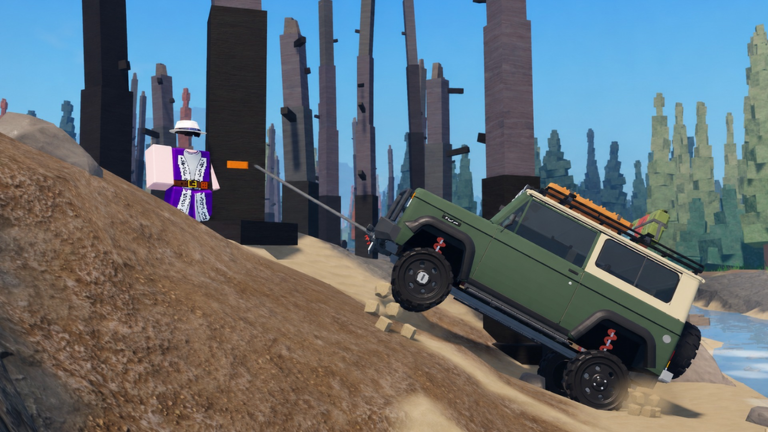
Winches turn Backseat Offroad into a conversation. This guide teaches multiplayer winch teamwork: who anchors, how to aim rope vectors, which callouts prevent chaos, and how to recover from flips without snapping patience. Use it with the broader Players Hub and the hardware advice in Climb Builds.
As of the 14 October 2026 launch design, crawling old 4x4s with low range, diff lockers, and winches is the intended fantasy — not racing ghosts. Co-op winching is how groups clear rock shelves, river exits, and snow crust that would eat a solo evening.
Roles on the rope
Lead (stuck or climbing truck)
- Owns the risky line.
- Calls when they want tension versus slack.
- Keeps steering pointed toward the intended exit, not into the Anchor’s door.
Anchor (rescue truck)
- Parks on the highest-friction flat ground available.
- Points the bumper so the rope runs as straight as terrain allows.
- Brakes, lockers as needed, and resists the urge to yo-yo the Lead.
Spotter (optional third)
- Watches wheels and belly clearance.
- Calls “stop” earlier than either driver feels ego-ready to hear.
Swap roles after each major shelf so one player does not burn out as perpetual Anchor.
Angle rules that matter more than horsepower
- Straight pulls beat side pulls when a truck is belly-high on a ledge.
- Uphill Anchors help more than downhill Anchors that slide into the problem.
- Tree and rock anchors work when a second truck cannot reach — still communicate before tensioning.
- Never pull a partner toward a cliff edge “for the meme.”
- Reset if the rope wraps a tire or bumper horn instead of forcing it.
If the Lead is turtled, decide whether to roll them gently sideways to wheels-down before a long forward tow. Blind full-power yanks can drag a roof into sharper damage or worse wedging depending on patch physics — go incremental.
Pre-pull checklist
Share this out loud:
- Both winches free of self-tangles
- Anchor in low range if they must resist slide
- Lead steering centered toward the escape lane
- Cameras agreed (who watches the rope)
- Escape plan if the Anchor starts sliding
- “Stop” word confirmed
Pair this with the garage-wide Trail Checklist at session start so you are not mounting a winch for the first time on ice.
Callouts that keep servers friendly
| Phrase | Use when |
|---|---|
| “Anchor set” | Rescue truck is braked and ready |
| “Hooked” | Rope attached; do not drive off |
| “Tension” | Take slack out gently |
| “Pulling” | Active tow in progress |
| “Slack” | Stop pulling; free the rope |
| “Stop stop” | Immediate halt |
| “Hold” | Maintain brake; do not creep |
| “Clear” | Unhooked; safe to drive |
Public servers appreciate the same brevity. Strangers help more when you sound competent.
Drill 1 — Flat ground communication
In the lakeside forest, practice hook, tension, two-meter pull, slack, clear. No ego. The goal is synchronized words, not distance.
Drill 2 — Shelf assist
Lead attempts a short rock step. Anchor stays below or beside on dirt. If Lead stalls with wheels spinning, tension early rather than after the chassis pivots sideways.
Drill 3 — River exit
Water Lead leaves a ford on a slick bank. Anchor on dry ground only. Snorkel trucks from the Tier List Hub shine here, but the rope still matters more than bravado.
Drill 4 — Summit crux
Use Summit Specialist + Heavy Haul pairing. Lead takes one shelf; Anchor never climbs into the same instability just to “be closer.” Distance with a clean vector beats two stuck friends.
Common failures
- Anchor parked in mud “because it looked close”
- Lead flooring throttle against a locked rope
- No stop word, only screaming
- Third friend attaching a second rope in a random direction
- Trying to fix a flipped truck with pure forward tow instead of a roll plan
- Blaming “bad ping” when the real issue was high-range panic
Solo habits that still help co-op
Teach every driver to self-winch to trees so the Anchor is a bonus, not life support. Getting Started locker timing remains mandatory homework. Co-op should amplify skill, not hide the absence of low range.
Safety and ToS note
Winching is a vanilla feature. You do not need executors, auto-winch scripts, or ESP to play well together. The Scripts Hub currently lists no verified Backseat Offroad scripts, and injecting tools risks bans for the whole friend group’s vibe. Keep recoveries legitimate.
After-action review (five minutes)
At the garage or alpine village, ask:
- Which pull angles worked?
- Who talked too late?
- Did parts (lift, engine swap) help or hinder the tow?
- Should tomorrow’s route swap Lead and Anchor earlier?
Log notes beside your Climb Builds choices so the next summit is calmer.
Related pages
- Players Hub — party roles and etiquette
- Climb Builds — hardware for steep assists
- Tier List Hub — which roles anchor best
- Updates Hub — patch notes that change rope feel
Clean angles, short callouts, and patience will rescue more convoys than any secret turbo rumor.
Frequently Asked Questions
Quick answers for crawls, winches, and co-op trails.
Who should winch whom?
The truck on stable ground anchors; the truck on the obstacle receives the pull. Swap after each shelf so one player is not always stuck.
What if we both get stuck?
Stop pulling each other in a circle. Free one truck to a tree or rock first, then rebuild a clean Anchor position.
Do we need voice chat?
Voice is best, but typed callouts work if you keep them short and confirm “stop” words before the crux.
Can more than two winches attach at once?
Only if vectors agree. Random multi-pulls often twist the Lead into a worse wedge — coordinate or stay at two.