Backseat Offroad Snow Summit Crawl Guide
Traction, low range, locker discipline, and winch staging for the white roof of the map.
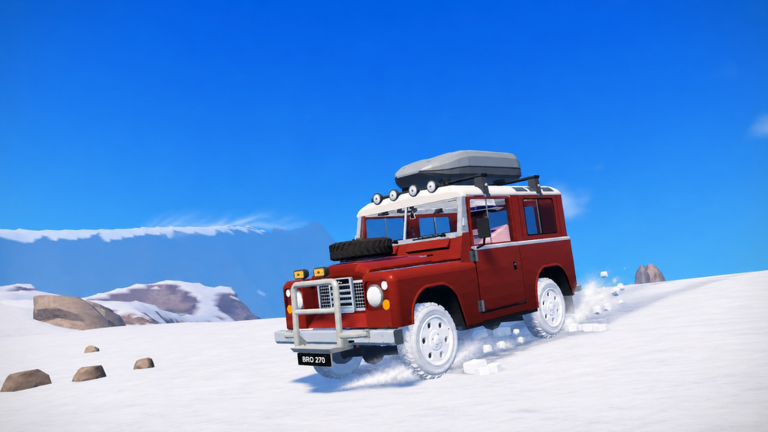
The snowy summit is where Backseat Offroad stops being a scenic forest drive and starts grading your habits. There is still no timer and no race—only colder traction, steeper shelves, and longer winch stories. This guide is the deep crawl playbook for the white band: how to keep bite, when to lock, how to stage cable, what builds help, and which mistakes end nights early.
If you have not mapped the climb in bands yet, read Map Zones first. New players should finish Getting Started and practice recoveries in timber before treating snow as a destination.
What makes snow different
Snow lies. A line that looked perfect from below can glaze under throttle. Descents hide ice patches that turn gentle steering into a slide toward a drop. Wheelspin digs trenches faster than in dry dirt. Diff lockers help when a wheel unloads, but they also make the truck stubborn in tight switchbacks. Low range is not optional flavor—it is how you keep wheel speed honest.
The fantasy stays co-op. Servers hold about twenty players; a friend parked as Anchor above a crux is worth more than another cosmetic lift. Solo summit pushes are possible, but tree-anchor literacy becomes mandatory.
Entry criteria (be honest)
Do not cross the snow line until:
- You can find low range without opening a menu mid-panic (Low Range and Diff Lock).
- You completed at least one clean tree recovery tonight (Winch Recovery).
- Someone can call Anchor / tension / slack / stop without arguing (Co-op Winching).
- The party spoke a turn-back time and a fail budget (example: three tries on the crux, then reset or descend).
- The Trail Checklist summit add-ons are ticked.
If any box fails, stay in mid-mountain or alpine approaches. The summit will still be there after the November surge crowds thin out for an hour.
Traction basics on the white band
Throttle: feather it. Surges break loose all four tires and carve ruts you must later climb out of.
Momentum: carry only enough to crest a shelf. Extra speed on ice is not bravery; it is a future winch scene.
Line choice: high side often beats the polished trough everyone else polished into a skating rink. Scout with the camera before the bumper commits.
Stops: park on flatter shelves to breathe. Stopping mid-off-camber with lockers engaged can leave you fighting the wheel when you restart.
Descents: low range downhill keeps speed from running away. Look where you want the truck to go, not at the cliff you fear.
Low range early—not mid-crux
Shift into low range before the steep pitch, not after the tires are already screaming. Mid-climb scrambling is how axles settle into holes. Practice the habit on forest hills so snow does not become your first classroom.
Low range pairs with patience: slower wheels, more controllable torque, fewer dug graves. If you are still in high range because “it felt fine lower down,” turn around and reset the approach.
Locker discipline
Engage when one tire is light or spinning uselessly on ice while the opposite side has bite. Locking forces the axle to share rotation so the truck can crawl instead of one-wheel burnouts.
Disengage when you need tighter steering on firmer packed sections or when the truck understeers into rocks. Leaving lockers on “forever” is a common summit mistake.
Call locker state in co-op so the Anchor knows whether you can pivot or only plow straight. Details and drills live on Low Range and Diff Lock.
Winch staging on snow
Snow cruxes rarely yield to one heroic yank. Stage the recovery:
- Stop digging. Wheelspin digs coffins.
- Spotter or driver camera-checks anchors: trees, rocks the game allows, or a friend’s bumper on high ground.
- Helper parks as Anchor on the best bite available, brakes set, ready to hold.
- Pull along a line that slides you onto the next shelf—not sideways into a roll.
- Rest on that shelf, disconnect if needed, re-hook higher, repeat.
Multi-stage pulls are normal. Ego single-pulls that tip the truck cost more time than two calm stages. Solo players should pre-identify tree lines on the approach instead of discovering there is only sky above the bumper. Full technique: Winch Recovery and Co-op Winching.
Build advice for summit nights
Hardware does not replace discipline, but it widens margins:
- Lift: enough belly clearance for rocks under snow crust; too much raises tip risk on off-camber ice.
- Snorkel: less critical on pure snow than on river approaches, but useful if your route still kisses flooded melt channels.
- Engine swap: prefer controllable crawl character over peak drama; wheelspin is the enemy.
- Winch: non-negotiable for serious summit plans.
- Tires/stance mindset: whatever the garage offers, bias toward bite and stability over mall-crawler height.
Compare roles on the Tier List and summit-focused notes in Climb Builds. Bolt-on explanations sit in Vehicle Upgrades.
Common mistakes
- Arriving in snow with untested winches.
- High-range charges that polish the only usable line into ice.
- Lockers always on, then wondering why the truck will not turn.
- Three friends yanking from bad angles at once.
- No turn-back time; descending exhausted in the dark (figurative or literal).
- Treating Backseat Offroad like a race because a thumbnail lied.
- Confusing this game with Backseat Rally and bringing the wrong expectations.
- Chasing fake codes or scripts instead of practicing (Codes, Scripts).
Session plan — summit push
| Phase | Time | Actions |
|---|---|---|
| Garage | 5–10 min | Trail Checklist, binds, parts |
| Forest proof | 10 min | Low range hill + one tree winch |
| Climb | 20–30 min | Efficient mid bands; minimal sightseeing |
| Alpine stage | 5–10 min | Rest, call roles, final go/no-go |
| Snow | 25–40 min | Crux attempts inside fail budget |
| Descent | 15+ min | Low range, space between trucks, no hero passes |
| Debrief | 5 min | What burned time: traction, rope, or ego? |
Exploration-heavy groups should not force this template. Mix cabin hunting from Hidden Places on a different night.
After a failed crux
Failure is data. Ask:
- Was the line bad, or the throttle?
- Did we need lockers engaged earlier—or unlocked for a pivot?
- Should the Anchor move ten meters for a straighter cable?
- Is the fail budget spent? If yes, descend with dignity and return later.
Check November 2026 Notes and the Updates Hub if traction suddenly feels alien after a Roblox stamp—re-test before rebuilding the entire garage.
Mindset
The summit is a place you earn with boring fundamentals. Feather the throttle, shift low early, lock with intent, stage the winch, and keep friends alive on the rope. Backseat Offroad launched 14 October 2026 as a free crawl fantasy; November’s crowd does not change the physics lesson. When you top out, take the screenshot, then descend like professionals. For routing context open Map Zones; for the full how-to index use the Guides Hub.
Frequently Asked Questions
Quick answers for crawls, winches, and co-op trails.
Do I need low range on the snow summit?
Yes. Shift into low range before steep snow pitches so wheel speed stays controllable and you dig fewer ruts.
When should I use diff lockers in snow?
Engage when a wheel is unloaded or spinning uselessly; unlock for tighter turns on firmer packed sections so the truck can pivot.
Can I solo the summit without friends?
Yes, but practice tree-anchor winching first and keep a strict turn-back plan. Co-op Anchors make cruxes safer.
What upgrades help most for summit climbs?
A ready winch, a sensible lift, and a controllable engine character. See Vehicle Upgrades and Climb Builds for role tradeoffs.